
What Is a Bot Network?
A bot network is a coordinated group of automated or semi-automated accounts controlled by a single operator and used to amplify a message far beyond what any individual could achieve. Bot networks are the engine behind most coordinated narrative attacks: they take a piece of content, true or false, and manufacture the scale and momentum that make it look organic and credible.
How a Bot Network Operates
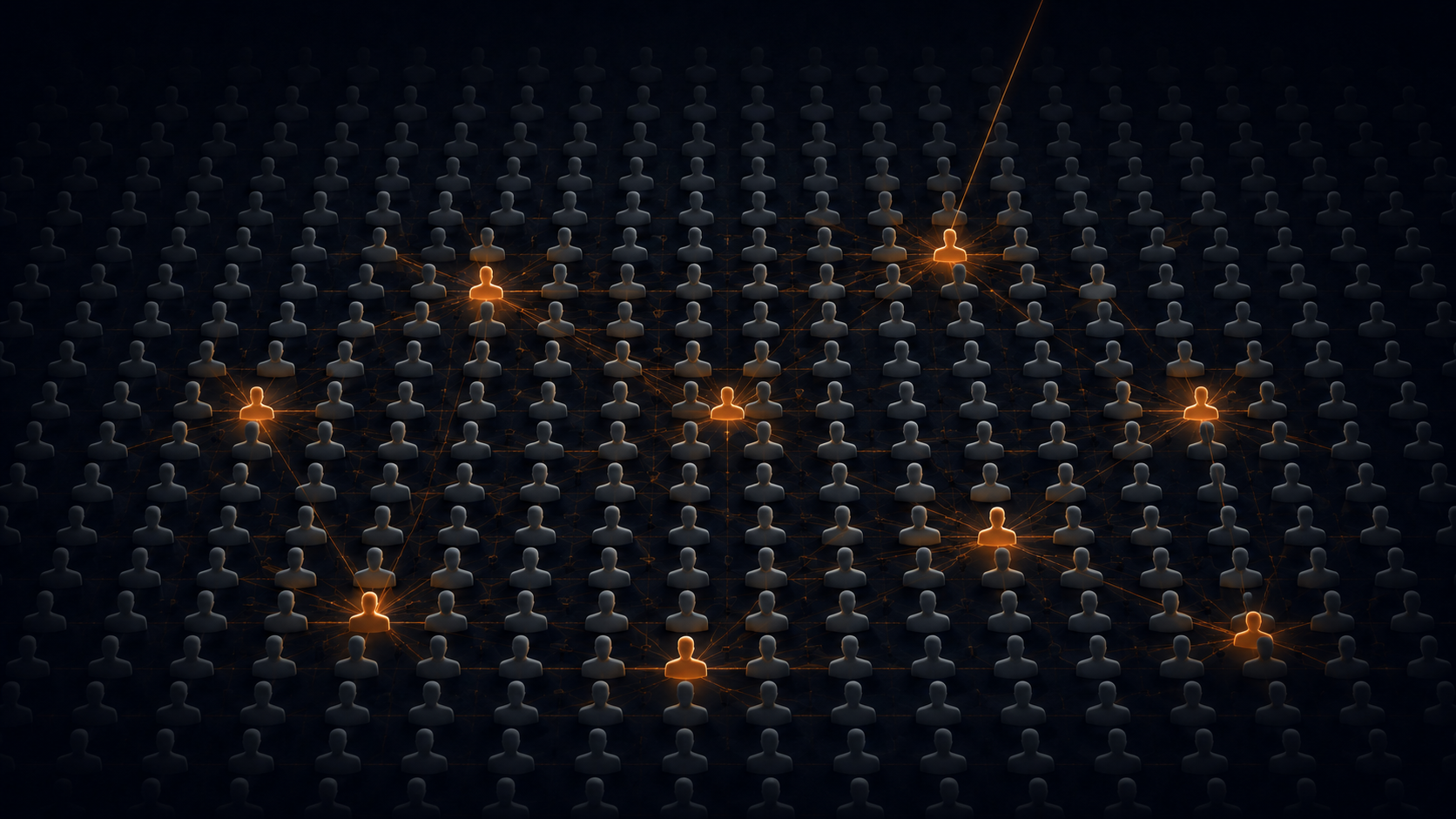
A bot network is less about any single fake account and more about the coordination between many of them. An operator builds or buys a pool of accounts, then directs them to act together: posting, reposting, replying and liking in patterns designed to push a narrative up the algorithmic rankings of a platform.
Modern bot networks are rarely crude. The accounts often mix automation with occasional human input, maintain plausible profiles, and vary their wording to avoid simple duplicate-content filters. What they cannot fully disguise is their behaviour. Hundreds of genuinely independent humans do not post within the same ninety-second window, share near-identical creation dates, or move in lockstep across several platforms at once. A bot network does.
Bots vs Bot Networks: Why the DistinctionMatters
A single bot is a minor nuisance. A bot network is an enterprise threat. Detecting one bot tells you little. Detecting the coordination between four hundred accounts tells you a campaign is underway. This is why simple bot-or-not classification, the approach of many academic and single-platform tools, misses the real risk.The signal that matters is not whether an account is a bot. It is whether a group of accounts is acting as one. This is the core idea behind coordinated inauthentic behaviour as a category.
What Bot Networks Are Used For
Bot networks underpin a wide range of harms: amplifying disinformation, running astroturfing campaigns, manipulating share prices through coordinated financial chatter, attacking brands and executives, inflating engagement metrics, and seeding political narratives. In every case the network's job is the same: convert a message into manufactured consensus before anyone notices the coordination.
How to Detect a Bot Network
Bot networks are best detected behaviourally, on a spectrum rather than a binary. Signal by AI Uniti scores accounts on a bot-to-human spectrum using temporal and behavioural signals: posting timing, account age and history, engagement ratios, and behavioural anomalies, then correlates that activity across platforms to surface the network as a whole. The verdict is deterministic and explainable, every conclusion traces to specific behavioural evidence, which matters for fraud, compliance and legal teams who need to acton and defend the finding. Because the coordination appears as the network warms up, it is visible 6 to 12 hours before volume-based monitoring raises an alert.
Frequently Asked Questions
What is a bot network in simple terms?
A bot network is a group of automated or semi-automated accounts controlled together to push a message and make it look more popular or credible than it really is.
How is a bot network different from a single bot?
A single bot is one automated account. A bot network is many accounts acting incoordination, which is what makes it powerful enough to move markets, opinion or reputation.
Are all bots harmful?
No. Many bots perform useful, legitimate functions. The risk comes from coordinated, deceptive bot networks used to manufacture consensus or amplify harmful narratives.
How do you detect a bot network?
By analysing behaviour rather than content: timing, account characteristics and cross-platform coordination reveal a network even when each account looksplausible on its own.
For more behavioural threat intelligence definitions, see the Narrative Threat Glossary.
Book a 15-minute Signal by AI Uniti demo at aiuniti.com/signal.
June 19, 2026